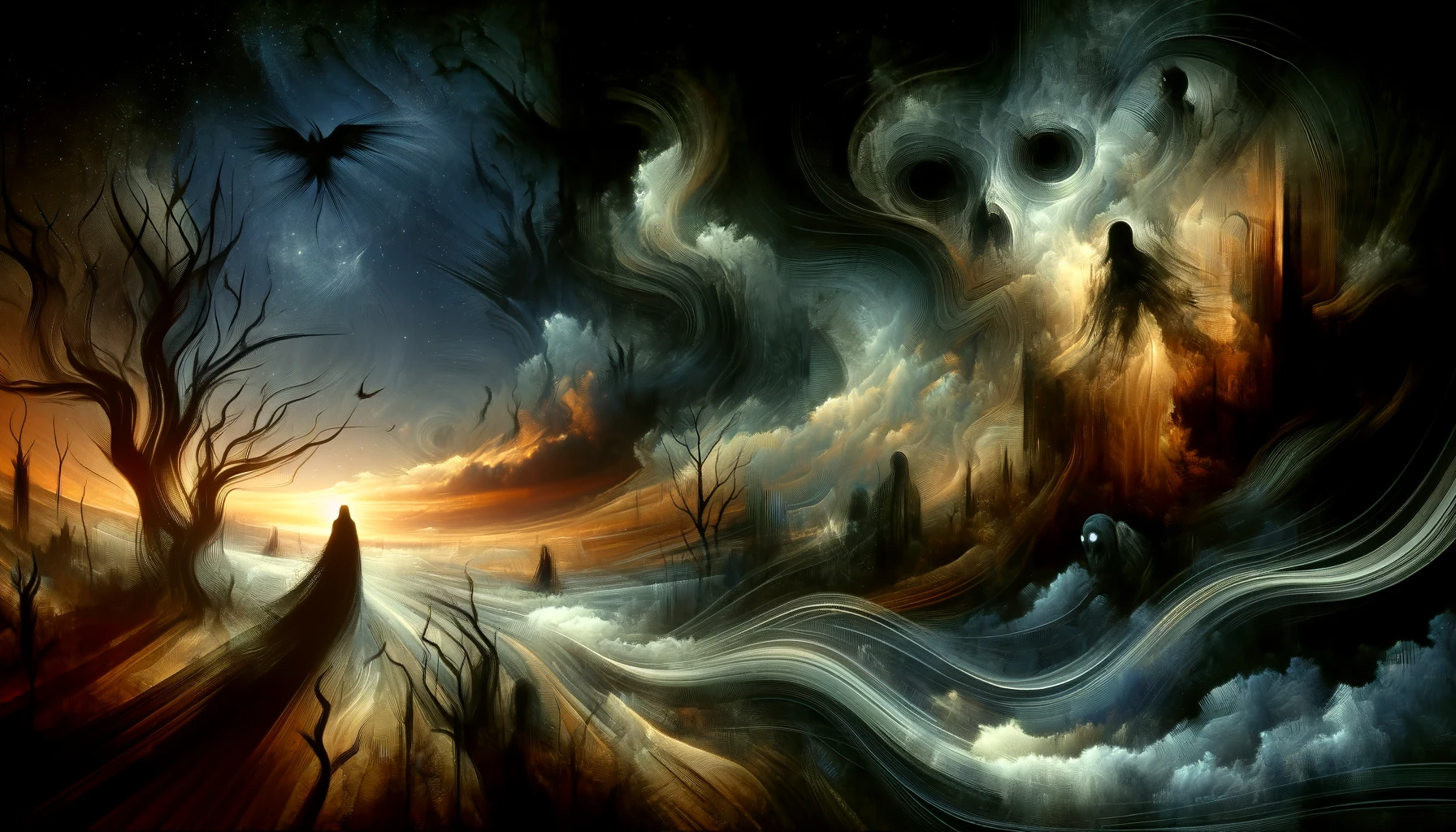
Dreams and spirituality have been linked for centuries because dreams often feel larger than ordinary thought. They can feel symbolic, numinous, deeply personal, and strangely timed. That does not mean every dream is a prophecy. It means dreams can carry experiences that feel spiritually significant because they touch identity, meaning, intuition, fear, and transformation at the same time.
Some dreams feel like emotional processing. Others feel like spiritual confrontation, guidance, release, or awakening. The challenge is staying grounded enough to tell the difference between genuine meaning and wishful over-interpretation.
The most useful approach is not to treat all dreams as messages from outside. It is to ask: what inner, symbolic, or spiritual dimension of my life is this dream making visible?
What makes a dream feel spiritual?
Spiritual-feeling dreams often have a different quality than ordinary dreams. They may feel unusually clear, emotionally deep, symbolic, sacred, or unforgettable. They can include strong light, ancestors, death and rebirth imagery, teachers, journeys, temples, water, animals, or a sense of presence that feels larger than the personal self.
Still, “spiritual” does not always mean supernatural. Sometimes the dream feels spiritual because it reveals truth, alignment, grief, or transformation in a way that cuts deeper than ordinary thought.
Spiritual dreams vs emotional dreams
The boundary is not always sharp. Many dreams are both emotional and spiritual. A dream about death can reflect grief, but also transformation. A dream about water can reflect overwhelm, but also cleansing. A dream about a guide figure can reflect inner wisdom, but also a real desire for direction.
That is why grounded interpretation matters. Spiritual language can deepen dream understanding, but it should not erase psychological reality.
A spiritually meaningful dream usually brings more depth and honesty, not more ego and fantasy.
Common spiritual themes in dreams
Transformation
Snakes, death, fire, storms, broken houses, and rebirth imagery often symbolize transition. Spiritually, these dreams may point to the end of one inner phase and the emergence of another.
Guidance
Meeting a teacher, ancestor, child, or wise stranger can symbolize guidance, intuition, or an inner voice becoming more accessible.
Cleansing and release
Water, tears, washing, rivers, and rain often carry cleansing symbolism. These dreams may show emotional release or purification rather than literal messages.
Shadow and confrontation
Dark figures, demons, threatening animals, or underground places may symbolize shadow work: fear, denied emotion, or parts of the self that need integration.
Dreams, intuition, and inner knowing
Many people experience dreams as intuitive because they reveal something they “already knew” but had not admitted clearly. In that sense, dreams can function like intuition amplified through symbol. They are often most accurate when they clarify an emotional truth rather than predict an external event.
A spiritually grounded interpretation asks what truth the dream brings you closer to, not what dramatic future story it lets you invent.
Can dreams be messages?
Some people experience dreams as messages, and that can be meaningful. But messages are best tested by clarity, humility, and relevance. A dream that leads to greater honesty, compassion, courage, or alignment is more trustworthy than one that flatters fear or fantasy.
In practice, the safest approach is this: treat a dream as meaningful first, literal second.
How culture and belief change spiritual dream interpretation
Different traditions read dreams differently. Some emphasize ancestors, some divine guidance, some karma, some unconscious symbolism. Cultural context matters because it shapes how symbols feel. But personal context matters too. The same symbol can carry a different charge in two different lives.
How to work with spiritual dreams responsibly
- Write down the dream before explaining it away.
- Notice the strongest symbol and strongest emotion.
- Ask what part of your inner life it reflects first.
- Use spiritual interpretation to deepen, not bypass, emotional truth.
- Watch for recurring patterns over time before making big conclusions.
Recurring spiritual dreams
If certain symbols keep returning—guides, water, snakes, temples, death, rebirth, heights, oceans, ancestors—the repetition usually matters. It may signal a phase of deep inner work rather than a random sequence of strange nights.
What spiritual dreams are not
They are not always prophecy. They are not always instructions. They are not proof that every symbol has cosmic importance. Often they are simply the deepest language your psyche has available for something your waking mind is still learning to face.
If you want to understand spiritual dream themes without losing grounding, use Dreamly to track recurring symbols, emotional tone, and timing. The pattern across dreams is usually more trustworthy than one dramatic night.
FAQ: dreams and spirituality
Are dreams spiritual?
Some dreams feel deeply spiritual, especially when they carry strong symbolism, guidance, or transformation themes. Not every dream needs to be read that way.
Can dreams be messages?
They can feel like messages, but the safest interpretation is to treat them as meaningful before treating them as literal predictions.
What symbols are common in spiritual dreams?
Water, snakes, death-rebirth imagery, guides, light, ancestors, temples, and journeys are common spiritual motifs.
How do I avoid over-interpreting dreams spiritually?
Start with emotional truth and personal context. Let spiritual meaning add depth rather than replace grounded interpretation.
Why do some dreams stay with me for years?
Because they often touch identity, grief, transformation, or a truth that still matters deeply to your inner life.