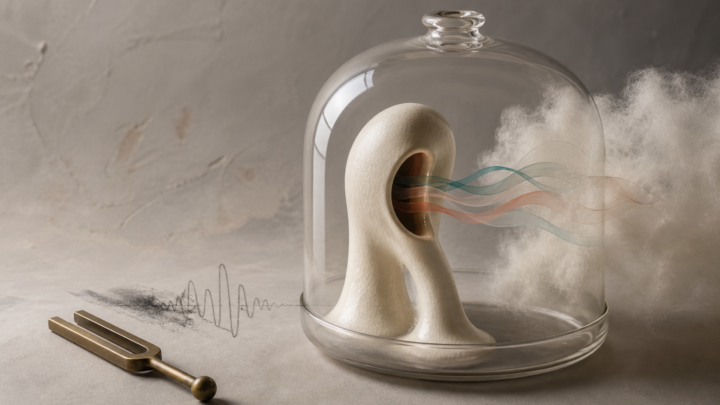
You wake up sweating, the room feels too bright, and the dream you just left made no ordinary sense: huge rooms, impossible tasks, hot colors, loops, childhood places, or a threat that kept changing shape. That is the signature of a fever dream. It is not usually a message that needs decoding before breakfast. It is often your sleeping mind trying to dream while your body is fighting illness, temperature swings, chills, pain, congestion, dehydration, or broken sleep.
This guide explains what fever dreams mean, why sick sleep can make dreams more bizarre and negative, when to focus on health instead of symbolism, and how to log the useful details in Dreamly after you feel well enough to reflect.
Sick-day answer
Fever dreams are intense, strange, often negative dreams that happen when illness and disrupted sleep change the conditions your brain is dreaming in. They are not reliable predictions and they do not diagnose what is wrong. Start with the body: fever, chills, sweating, pain, medications, dehydration, and repeated awakenings can all make dreams feel more vivid or distorted. After you are safe and resting, the dream symbols may still reveal what being sick made you feel: vulnerable, trapped, overheated, watched, rushed, or out of control.
- Hot, bright, or burning settings often mirror fever, sweating, or an overheated bedroom.
- Repeating loops often fit fragmented sleep, where the brain keeps re-entering the same scene.
- Medical, family, or childhood scenes often connect illness with care, dependence, and memory.
- Monsters, pressure, or panic often reflect physical discomfort plus threat-processing during a rough night.
Why fever dreams feel different
A 2020 study in Frontiers in Psychology found that remembered fever dreams were more bizarre and more negatively toned than ordinary recent dreams, with more references to health and temperature. That fits what many people notice during flu, COVID, stomach bugs, summer viruses, and other illnesses: the dream does not simply become vivid. It becomes physically strange.
Fever can raise body temperature, disrupt sleep continuity, and make you wake more often. Those brief awakenings can improve recall while also leaving the dream ragged. Instead of a clean story, you may remember flashes: a room expanding, a blanket becoming heavy, a task that never ends, a face that keeps changing, a sense that time is too fast or too slow.
In the U.S., this topic is also seasonally useful. People search for fever dreams after waves of respiratory illness, after travel, during back-to-school virus season, and during hot summer nights when illness and bedroom heat overlap. The current hook is practical: if a dream appears during a feverish night, interpret the body first.
The meaning map: body signal first, symbol second
The best fever-dream interpretation is two-layered. First ask what your body was doing. Then ask what the dream made that body state mean emotionally.
Heat becomes landscape. A desert, fire, red sky, boiling room, bright hallway, or melting object may be your mind turning temperature into scenery. The symbolic layer is often pressure: something feels too intense, too exposed, or impossible to cool down.
Chills become pursuit. Shivering, aches, and tension can show up as being chased, watched, squeezed, or unable to relax. The symbolic layer is usually vulnerability: your defenses are low and you want safety.
Congestion becomes blocked movement. Stuffy breathing, coughing, or a heavy chest can turn into narrow corridors, elevators that stall, thick air, or a room with no exit. The symbolic layer may be frustration or helplessness, but the first explanation may simply be physical discomfort.
Fragmented sleep becomes loops. Feverish nights often break into small pieces. In dreams, that can feel like repeating the same impossible task: packing, counting, searching, solving, escaping, or restarting the scene. The symbolic layer is overwhelm.
Care needs become old memories. Childhood bedrooms, parents, school nurses, grandparents, or old homes can return when illness makes you feel dependent again. The symbolic layer is not childishness. It is the part of you that wants care without having to perform competence.
When to stop interpreting and care for the fever
If you are currently sick, do not turn a frightening dream into another problem to solve. Mayo Clinic notes that fever is usually a sign that the body is responding to infection or another condition, and CDC guidance lists fever or chills among common COVID symptoms. Follow current public-health and medical guidance for your symptoms, and seek urgent help for serious warning signs such as trouble breathing, persistent chest pain or pressure, confusion, inability to wake or stay awake, severe dehydration, or a very high or worsening fever.
Dreamly is useful for reflection, not diagnosis. Use it after the immediate health question is handled. A fever dream may help you notice fear, loneliness, or the need for care, but it should not replace medical judgment.
What to track after a fever dream
When you feel steady enough, write a short entry while the texture is still fresh. You do not need every detail. Track the few details that separate a fever dream from an ordinary nightmare.
- Body state: fever, chills, sweating, pain, coughing, nausea, congestion, medication, dehydration, or heat in the room.
- Dream temperature: hot, cold, burning, frozen, humid, bright, heavy, or airless.
- Pattern: one scene, looping scene, rapid fragments, childhood place, medical setting, chase, or impossible task.
- Emotion: panic, disgust, loneliness, embarrassment, urgency, relief, or a need to be cared for.
- After-effect: did the dream fade once the fever broke, or did the same theme return after recovery?
In Dreamly, tag entries with phrases like fever dream, sick sleep, nightmare, heat, chills, loop, childhood home, or body discomfort. Patterns matter more than one dramatic image.
How fever dreams differ from stress dreams
Stress dreams usually grow from deadlines, conflict, social pressure, or unresolved emotion. Fever dreams can include those themes, but they often feel more sensory: hotter, heavier, brighter, more distorted, and less logical. A stress dream may say, I am not ready for the test. A fever dream may say, The test is in a room that keeps expanding and the paper is melting.
That difference is useful. If the weirdness was strongest while you were ill and faded as you recovered, treat the dream as a sick-sleep episode. If the same dream continues when you are healthy, then the symbol deserves a deeper look, especially if it links with nightmares and anxiety, recurring dreams, or a recent sleep change such as melatonin-related vivid dreams.
A recovery-minded way to interpret it
Use a three-sentence note instead of a grand theory:
My body was… feverish, chilled, sweating, congested, medicated, or exhausted.
The dream turned that into… heat, loops, pursuit, a childhood room, a hospital-like scene, or an impossible task.
The feeling underneath was… needing care, wanting control, feeling trapped, fearing vulnerability, or wishing someone would notice.
That keeps the interpretation grounded. The dream can be meaningful without being mystical, and strange without being dangerous.
FAQ
What are fever dreams?
Fever dreams are unusually vivid, bizarre, or emotionally intense dreams that happen while you are sick, feverish, overheated, or sleeping in disrupted fragments. They often include heat, loops, distorted space, fear, or body-related themes.
Why are fever dreams so weird?
They are weird because illness can change the body’s sleep environment. Fever, chills, pain, dehydration, congestion, medications, and repeated awakenings can all make dreams more fragmented, sensory, and memorable.
Are fever dreams dangerous?
The dream itself is usually not dangerous. The health context matters more. If you have severe symptoms, a very high fever, trouble breathing, confusion, chest pain, signs of dehydration, or symptoms that worry you, follow medical guidance instead of focusing on dream meaning.
Do fever dreams predict illness?
No. A fever dream does not reliably predict an illness outcome or diagnose a condition. It may reflect that your body is uncomfortable, your sleep is disrupted, or your mind is processing vulnerability while you are sick.
Why do fever dreams repeat in loops?
Looping dreams often happen when sleep is repeatedly interrupted. Each brief awakening can send the brain back into the same unfinished scene, making the dream feel like a task, puzzle, or trap that will not end.
What should I write down after a fever dream?
Write down your body state, the dream’s temperature or texture, the strongest emotion, and whether the dream faded after the fever passed. That is enough to separate a sick-sleep episode from a recurring symbolic pattern.
Sources and further reading
- Frontiers in Psychology: Fever Dreams: An Online Study
- Mayo Clinic: Fever symptoms and causes
- CDC: Symptoms of COVID-19
- Sleep Foundation: Dreams
- Sleep Foundation: Nightmares
- Sleep Foundation: Best bedroom temperature for sleep