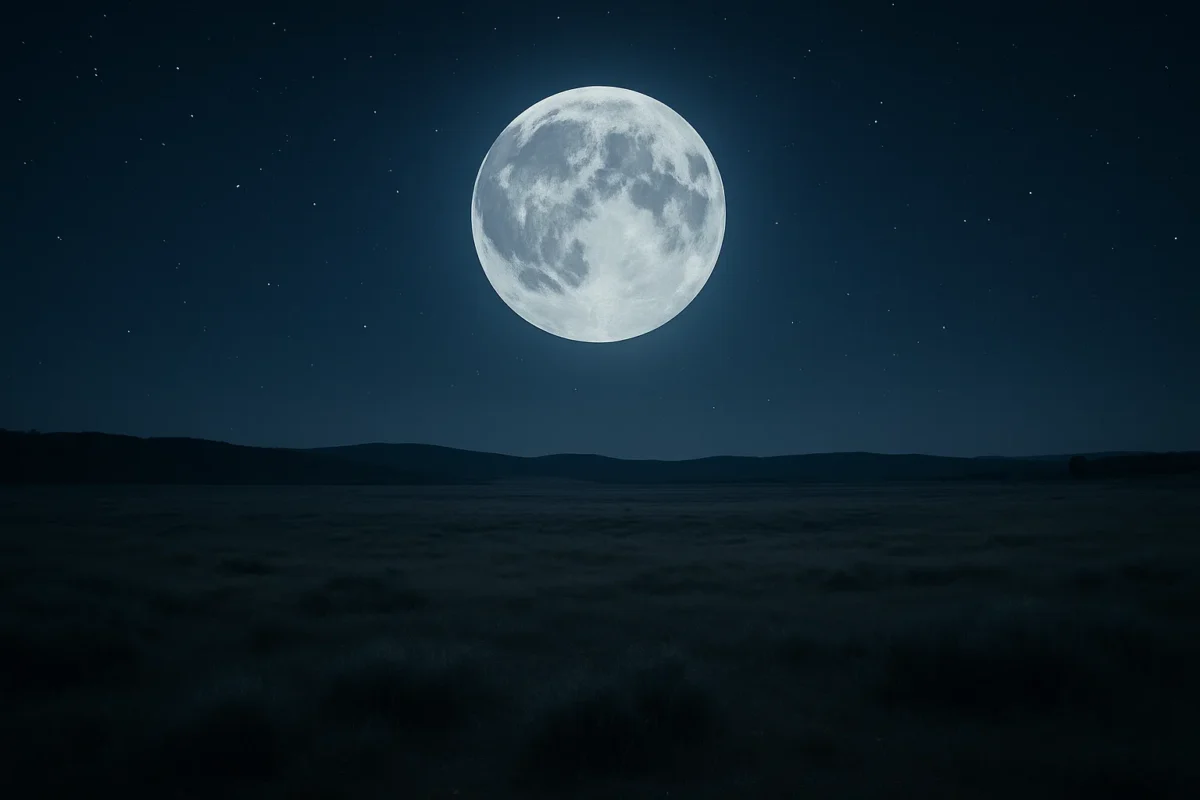
There’s something about a full moon that feels impossible to ignore.
It doesn’t just brighten the sky — it changes the atmosphere. The night feels sharper, quieter, almost electric. And for a lot of people, it changes sleep too. You wake up more. Your dreams feel louder. Stranger. More emotional. Sometimes you remember them in crystal detail, like your mind turned the contrast all the way up.
So the question comes naturally: are full moon dreams actually a thing… or are we just telling ourselves a good story?
The honest answer is: a bit of both. There’s real history here, real psychology, and a small but intriguing body of sleep research. And even if the moon isn’t “causing” anything in a magical way, the pattern many people notice is still worth paying attention to.
Want to explore your dreams more deeply — full moon or not? Try Dreamly, your AI-powered dream journal available on Android and iOS.
Why the Full Moon Has Always Been Linked to the Mind
Long before anyone talked about REM sleep, people were already watching the moon and noticing how it seemed to stir human life.
Across cultures — Roman, Mayan, Hindu, and many Indigenous traditions — the full moon wasn’t just a pretty phase. It was seen as an amplifier. A time when emotions rose, intuition sharpened, and the boundary between “ordinary reality” and inner worlds felt thinner.
Even our language carries that old belief. The word “lunacy” comes from luna, the Latin word for moon — a reminder of how deeply we’ve connected the moon to mood, behavior, and the mysterious side of the psyche.
Whether you take that spiritually or symbolically, it makes sense: dreams are already a nightly doorway into the subconscious. The full moon simply became the night people paid extra attention.
What Sleep Science Actually Suggests
Here’s where it gets interesting: some sleep studies have found small shifts around the full moon for certain people — lighter sleep, more awakenings, and changes in REM patterns (the stage most associated with vivid dreaming).
One possible explanation is melatonin, the hormone that helps regulate sleep. In some individuals, melatonin levels may dip slightly around the full moon, which could make sleep feel less deep and more fragmented.
But the science isn’t settled. Not every study finds the same effect, and researchers often point out other factors that could be responsible — like subtle light exposure, routine changes, or even expectation (“I always sleep weird on a full moon,” so you notice it more).
Still, even a small amount of sleep disruption can change dreams dramatically. Because when you wake up more, you tend to remember dreams more. And when your sleep stays closer to the surface, dreams can feel sharper, more intense, and more emotionally charged.
Why Full Moon Dreams Can Feel So Vivid
If you’ve ever had a full moon dream that felt almost cinematic, you’re not imagining the feeling.
Vivid dreams often happen when you’re hovering near consciousness — not fully asleep, not fully awake. That in-between space is where lucidity can pop up too: the moment when you realize you’re dreaming, or when the dream feels unusually “real.”
So if the full moon nudges your sleep into lighter, more interrupted territory — even slightly — it can create the perfect conditions for dreams you remember in detail the next morning.
The Emotional “Amplifier” Effect
Many people swear the full moon amplifies emotions. You’ll hear it from nurses, emergency workers, teachers, even parents: people seem more reactive, more sensitive, more restless.
Whether that’s moon power, confirmation bias, or simply the fact that brighter nights can disrupt sleep, the result is similar: when your nervous system is a little more activated, your dream life tends to get more intense.
That’s why full moon dreams can include:
unresolved arguments replaying in symbolic form,
powerful reunions with people you miss,
recurring symbols that suddenly feel urgent,
cathartic crying or emotional release,
or nightmares that leave you shaken — not because they predict something, but because they touch something real inside you.
Dreams don’t need to be supernatural to be meaningful. Sometimes they’re simply your emotions finally getting a clear voice.
How to Work With Full Moon Dreams (Without Getting Weird About It)
You don’t need a complicated ritual to benefit from the full moon. But you can use it as a gentle reminder to slow down and listen.
On full moon nights, try this:
Before bed, set one simple intention: “Tonight, help me see what I’m not seeing.”
Keep your phone away if you can — even 20 minutes of quiet helps.
When you wake up, write a few lines immediately: what happened, how it felt, what stood out.
Then ask: What emotion is this dream carrying for me?
That’s it. No pressure. No dramatic meaning-making. Just attention.
What If the Full Moon Brings Nightmares?
If your dreams become darker around the full moon, it doesn’t mean something bad is coming. It often means you’re more emotionally “open” — and your mind is processing stress you’ve been powering through during the day.
If you wake up unsettled, try grounding your body first: breathe slowly, feel your feet, drink water, remind yourself you’re safe. Then reflect on the theme, not the literal storyline.
And if sleep disruption, anxiety, or nightmares become frequent and distressing, it’s always okay to seek professional support. Your sleep matters. Your nervous system matters.
Conclusion
So… do full moons affect dreams?
For some people, yes — at least indirectly. The full moon can coincide with lighter sleep, more awakenings, and a stronger memory of dreams. Add the cultural weight we’ve given the moon for centuries, and it becomes the perfect stage for intense inner storytelling.
Whether you see it as science, symbolism, or something in between, the invitation is the same: when the moon is full, pay attention.
Your mind might be leaving you a message in moonlight — and it might be worth decoding.
Ready to remember and interpret your dreams more clearly? Start journaling with Dreamly available on Android and iOS and turn vivid nights into real insight.