
Google Search makes some dream topics far more visible than others. This report looks at 225,372 impressions across Dreamly’s 50 leading pages to show which themes stood out—and what those numbers actually mean.
This data measures
How often selected Dreamly pages appeared in Google results between and .
This data does not measure
Total search demand, unique people, or how frequently anyone dreams about a topic.
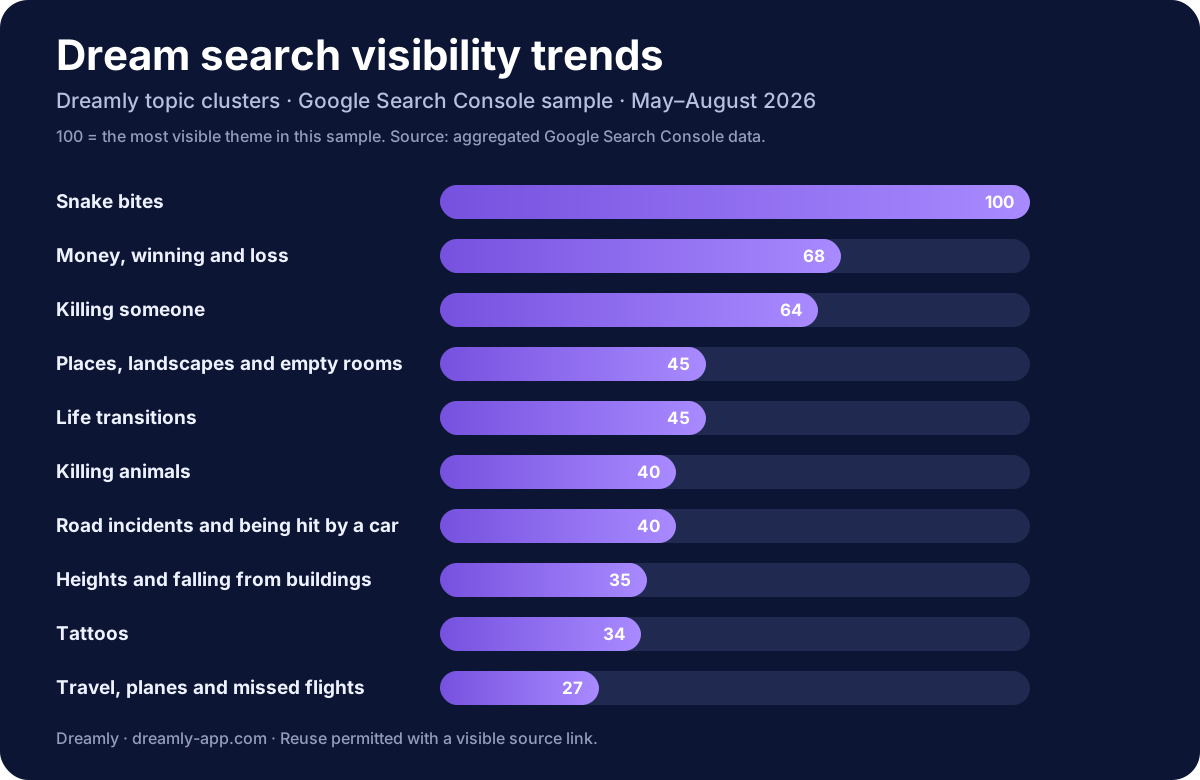
The topics that stood out
Each score is relative to the leading topic, which is set to 100.
100
68
64
45
45
40
40
35
34
27
The sample, in numbers
- 225,372Google Search impressions
- 1,051Clicks across the 50 pages
- 50Dreamly pages analyzed
- 10Curated topic groups
- 63.82%Of sample impressions covered by these groups
Three numbers to know
Visibility score
A relative score. The leading topic is set to 100 and every other topic is compared with it.
Impressions
The number of times a selected Dreamly page appeared in Google Search results.
Average position
An impression-weighted Google position. Lower numbers generally mean stronger visibility.
Full ranking
Every topic below links back to the exact Dreamly pages included in the calculation.
| Rank | Topic | Visibility | Impressions | Clicks | Avg. position | Sources |
|---|---|---|---|---|---|---|
| 1 | Snake bites | 100 | 28,922 | 85 | 16.34 | |
| 2 | Money, winning and loss | 68 | 19,547 | 65 | 19.54 | |
| 3 | Killing someone | 64 | 18,466 | 52 | 16.86 |
2 source pages · EN, IT |
| 4 | Places, landscapes and empty rooms | 45 | 13,084 | 52 | 11.56 | |
| 5 | Life transitions | 45 | 12,954 | 59 | 17.03 | |
| 6 | Killing animals | 40 | 11,648 | 50 | 7.72 |
2 source pages · EN, ES |
| 7 | Road incidents and being hit by a car | 40 | 11,594 | 75 | 9.31 |
2 source pages · EN, IT |
| 8 | Heights and falling from buildings | 35 | 10,015 | 22 | 10.86 |
2 source pages · EN |
| 9 | Tattoos | 34 | 9,776 | 55 | 11.66 |
2 source pages · EN, IT |
| 10 | Travel, planes and missed flights | 27 | 7,822 | 35 | 21.06 |
3 source pages · EN, IT |
Inside the methodology
1. Source and timeframe
We used a frozen export from Dreamly’s Google Search Console property covering May 7 to August 5, 2026. It contains the 50 Dreamly pages with the most impressions in that export.
2. Topic groups
We assigned 25 pages to ten non-overlapping editorial groups. These topic names are Dreamly groupings, not Google categories.
3. Visibility calculation
We summed impressions within each group, then compared every group with the largest one.
round(theme impressions / maximum theme impressions * 100)
4. Average position
We weighted each page’s average position by its number of impressions.
sum(page average position * page impressions) / theme impressions
Download the dataset
Get every topic, source page and calculation in the format you need. Reuse is governed by Dreamly’s Terms of Use.
JSON fingerprint7942a6ca8612f255a8c5bc1a06319064c85c386b8e45a4fffdd62bb5ee9b31b6
What this data cannot tell us
- The sample includes only searches where a Dreamly page appeared. It does not represent the entire dream-search market.
- An impression is not a unique person or a unique search. The same person can generate several impressions.
- Google Search Console may hide some low-volume searches for privacy reasons.
- The ten topics are editorial groups created by Dreamly, not categories supplied by Google.
- The results do not show how common a dream is or how often people dream about a topic.
- Clicks and average positions apply only to the selected Dreamly pages and study period.
Topics involving violence describe search pages about dreams. They are not evidence of real-world intent, behavior, diagnosis or risk.
How Dreamly handles research
Dreamly keeps search-performance data separate from claims about dream meaning. Read how Dreamly interprets dreams and the Dreamly Editorial Policy for our sourcing, review and correction standards. For questions about this dataset, email hello@dreamly-app.com.
Find the patterns in your own dreams.
This report shows broad search trends. Dreamly helps you follow the details, emotions and symbols that recur in your personal dream journal.